

Panteon Rzym: Historia, architektura, bilety i przewodnik turystyczny
The Pantheon Rome is one of the most remarkable ancient monuments in Italy and one of the must-see attractions for anyone visiting the Eternal City. Located in the heart of Rome at Piazza della Rotonda, this extraordinary building has survived almost two thousand years of history.
From its impressive Corinthian columns to its enormous concrete dome and famous central oculus, the Pantheon offers visitors a unique glimpse into the engineering and architectural achievements of ancient Rome.
Whether you are visiting Rome for the first time or returning to explore more of the city, the Pantheon deserves a place on your itinerary.
A Brief History of the Pantheon
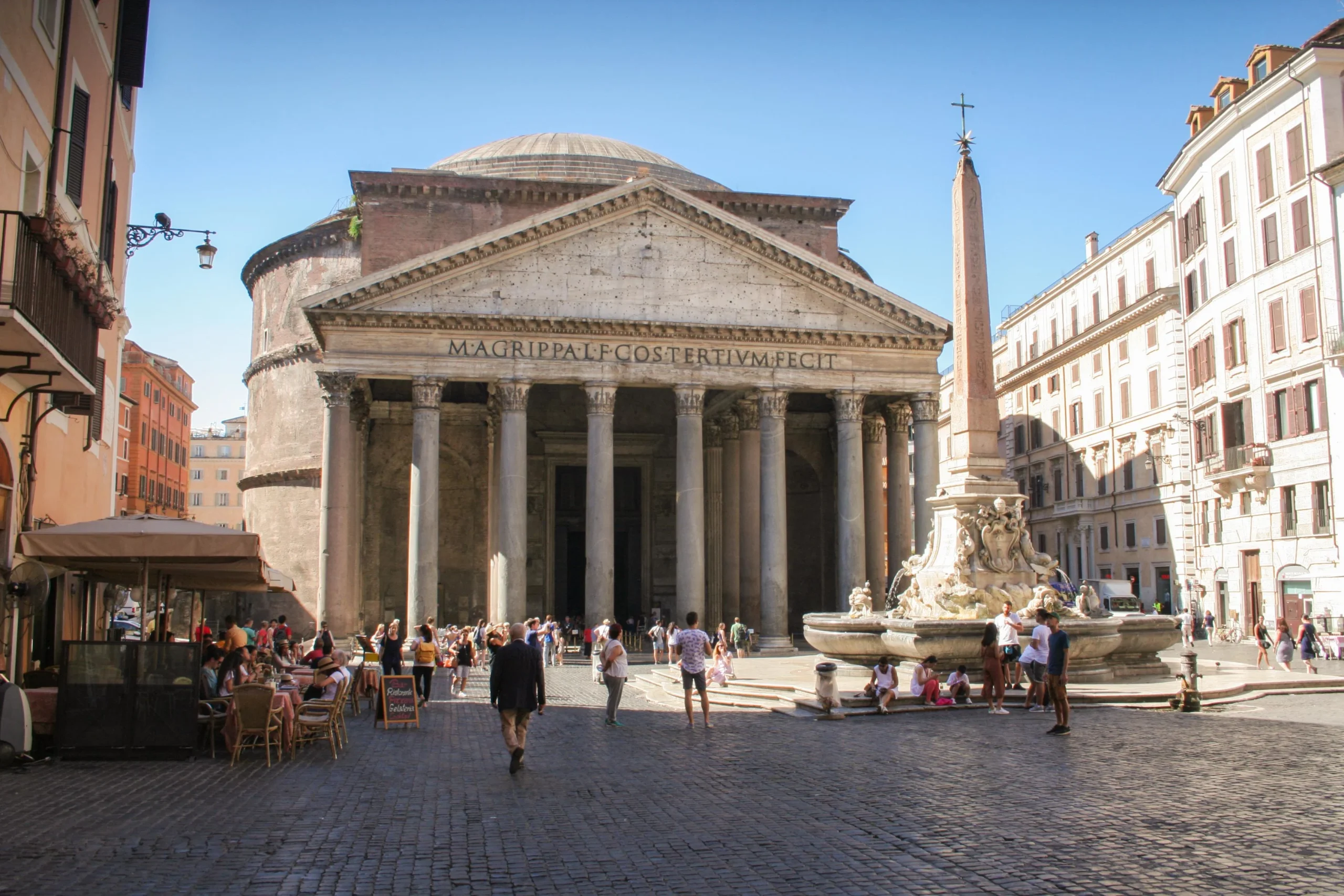
The original Pantheon was commissioned by Marcus Vipsanius Agrippa during the reign of Emperor Augustus, around 27–25 BC. The inscription on the front of the building still carries Agrippa’s name.
However, the building visitors see today is largely the result of reconstruction during the reign of Emperor Hadrian, around 118–125 AD. The reconstructed monument introduced the magnificent circular rotunda and its enormous dome that have become symbols of Roman architectural achievement.
The Pantheon later underwent an important transformation. In 609 AD, it was converted into a Christian church and dedicated as Basilica of Santa Maria ad Martyres. This continued use helped preserve the building through the centuries.
Today, the Pantheon remains one of the best-preserved monuments from ancient Rome.
The Amazing Pantheon Dome
One of the main reasons people visit the Pantheon is its extraordinary dome.
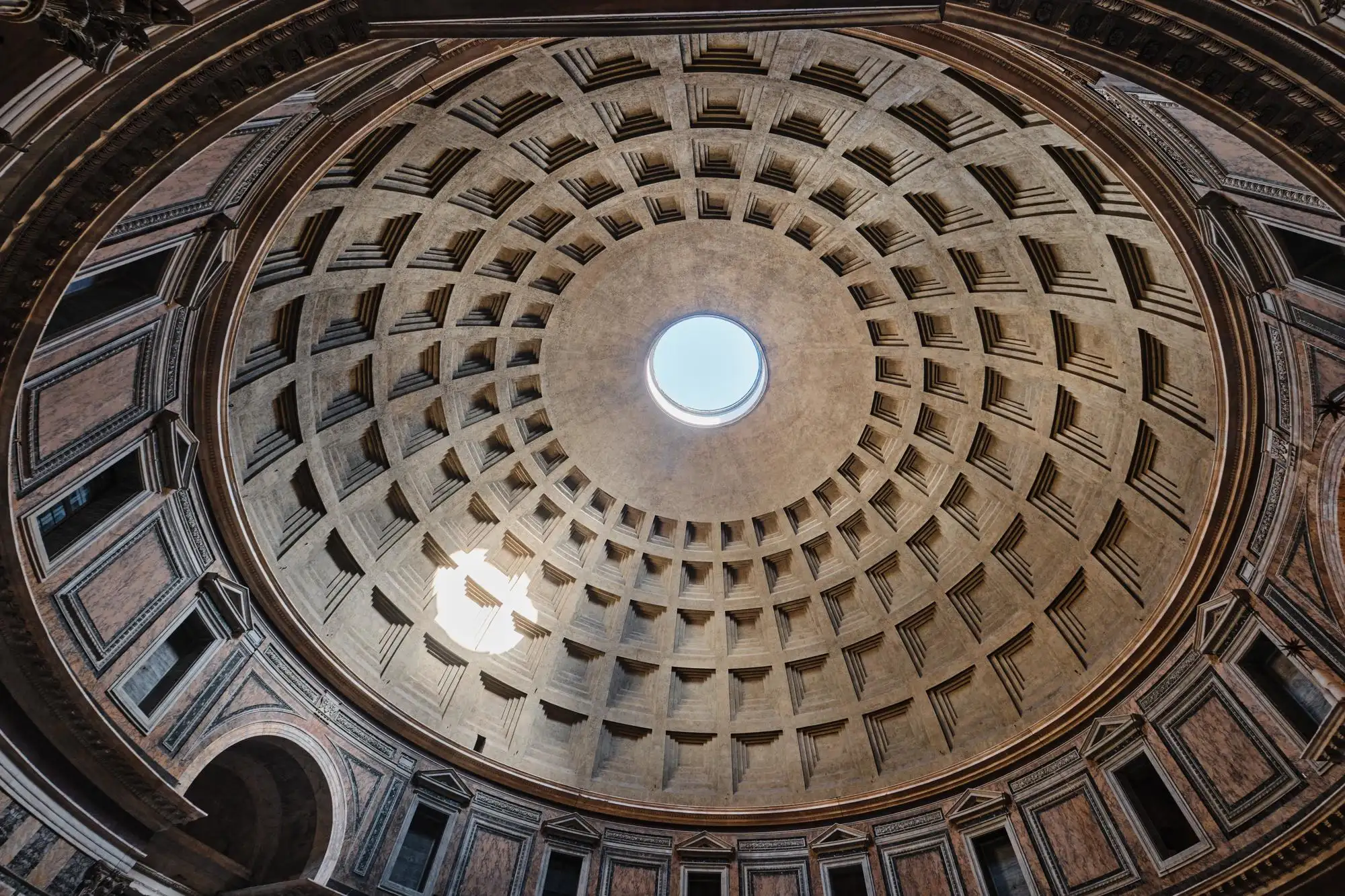
The interior rotunda measures approximately 43.3 metres in diameter and 43.3 metres in height, creating a remarkable geometric relationship between the floor, walls and dome. At the centre of the dome is the famous oculus, a circular opening approximately 9 metres wide.
The oculus is not simply a decorative feature. Natural light enters through it and moves across the interior throughout the day, creating an impressive visual experience.
Kopuła jest również niezwykłym przykładem rzymskiej inżynierii. Jego konstrukcja pokazuje, w jaki sposób rzymscy budowniczowie wykorzystywali beton, geometrię i zmieniającą się gęstość materiału, aby stworzyć ogromną, niepodpartą przestrzeń.
Aby dokładniej przyjrzeć się rzymskiej inżynierii i znaczeniu architektonicznemu Panteonu, odwiedzający mogą zapoznać się z materiałem Panteonu dostępnym za pośrednictwem Google Sztuka i kultura.
Dlaczego Panteon jest ważny?
Panteon to znacznie więcej niż starożytny budynek. Reprezentuje kilka różnych okresów historii Rzymu.
Zaczęło się jako rzymski zabytek religijny, później zostało przekształcone w kościół chrześcijański i ostatecznie stało się ważnym zabytkiem historycznym i kulturowym.
Wyjątkowe zachowanie budynku sprawia, że jest on szczególnie cenny dla zrozumienia starożytnej architektury rzymskiej. Panteon jest zawarty w Historyczne centrum Rzymu, obiekt wpisany na Listę Światowego Dziedzictwa UNESCO, zawierający jedne z najważniejszych zabytków archeologicznych i architektonicznych na świecie.
Jego wpływ widać również w architekturze na całym świecie. Połączenie klasycznego portyku i ogromnej kopuły zainspirowało niezliczonych architektów i monumentalne budynki na przestrzeni dziejów.
Co widzisz w Panteonie?
Podczas wizyty warto zwrócić szczególną uwagę na kilka cech:
1. Kolumny korynckie
Wejście zdominowane jest przez monumentalny portyk podtrzymywany przez 16 dużych kolumn korynckich made from granite. Their scale immediately gives visitors an idea of the engineering ambition behind the building.
2. The Oculus
The circular opening at the centre of the dome is arguably the Pantheon’s most famous architectural feature.
When sunlight enters through the oculus, the beam of light moves across the interior, creating a constantly changing atmosphere.
3. The Coffered Dome
The interior of the dome contains a series of recessed geometric panels known as coffers. Besides their visual beauty, these elements help reduce the weight of the structure.
4. Historic Tombs
The Pantheon also contains important tombs. Among the notable people buried here is the famous Renaissance artist Raphael, along with members of the Italian royal family.
Pantheon Rome Tickets and Opening Hours
Visitors should check the official information before travelling because opening hours, ticket rules and special arrangements can change.
As of 2026, the official Italian Ministry of Culture information states that the standard admission price is €7, with reduced admission available for eligible visitors aged 18–25. Children under 18 can enter free under the applicable rules.
The Pantheon is generally open from 9:00 AM to 7:00 PM, with last entry before closing. Special evening openings may also take place during particular periods.
It is important to purchase tickets through official channels and check the latest information before your visit.
Best Time to Visit the Pantheon
The Pantheon can be busy, especially during peak tourist periods.
For a more comfortable experience, consider visiting:
- Early in the morning
- Later in the afternoon
- Outside the busiest holiday periods
If you are interested in photography, different times of day provide different lighting conditions inside and outside the monument.
Okolica Piazza della Rotonda warto też zgłębić. Po zwiedzeniu Panteonu można podziwiać zabytkową atmosferę placu i kontynuować spacer w kierunku innych słynnych atrakcji w centrum Rzymu.
Odkryj Panteon podczas podróży do Rzymu
Panteon znajduje się w centralnej części Rzymu, dzięki czemu można go łatwo łączyć z innymi słynnymi atrakcjami.
Dobrze zaplanowana trasa Rzymu może obejmować Panteon wraz z miejscami takimi jak Piazza Navona, Fontanna di Trevi, Forum Romanum i Koloseum.
Jeśli szukasz wygodnego sposobu na zwiedzanie głównych atrakcji miasta, rozważ zaplanowanie Zwiedzanie miasta Rzym z lokalnym organizatorem wycieczek. Może to pomóc Ci doświadczyć Panteonu i innych zabytków bez poświęcania zbyt wiele czasu na organizowanie transportu i tras.
Uwagi końcowe
The Pantheon Rome to rzadki zabytek, w którym historia, architektura i kultura łączą się w jednym niezwykłym miejscu.
Od starożytnych początków świątyni Agryppy po rekonstrukcję Hadriana i jego późniejsze przekształcenie w kościół, Panteon nieustannie ewoluował, zachowując swój niezwykły charakter architektoniczny.
Jego masywna kopuła, słynny oculus, monumentalne kolumny i historyczne wnętrze sprawiają, że jest to jedno z najbardziej fascynujących miejsc do odwiedzenia w Rzymie.
Jeśli planujesz podróż do Włoch, upewnij się, że Panteon jest uwzględniony w Twoim planie podróży do Rzymu. Wizyta tutaj nie jest po prostu doświadczeniem krajoznawczym - jest to okazja, aby stanąć wewnątrz jednego z największych zachowanych osiągnięć starożytnej architektury na świecie.
Zaplanuj swoją rzymską przygodę i odkryj Panteon, historyczne zabytki i niezapomniane atrakcje w Wiecznym Mieście.