

Pantheon Rome: History, Architecture, Tickets & Visiting Guide
La Panthéon Rome est l'un des monuments antiques les plus remarquables d'Italie et l'une des attractions incontournables pour tous ceux qui visitent la Ville éternelle. Situé au cœur de Rome, sur la Piazza della Rotonda, ce bâtiment extraordinaire a survécu à près de deux mille ans d'histoire.
De ses impressionnantes colonnes corinthiennes à son énorme dôme en béton et à son célèbre oculus central, le Panthéon offre aux visiteurs un aperçu unique des réalisations techniques et architecturales de la Rome antique.
Que vous visitiez Rome pour la première fois ou que vous retourniez explorer davantage la ville, le Panthéon mérite une place dans votre itinéraire.
Une brève histoire du Panthéon
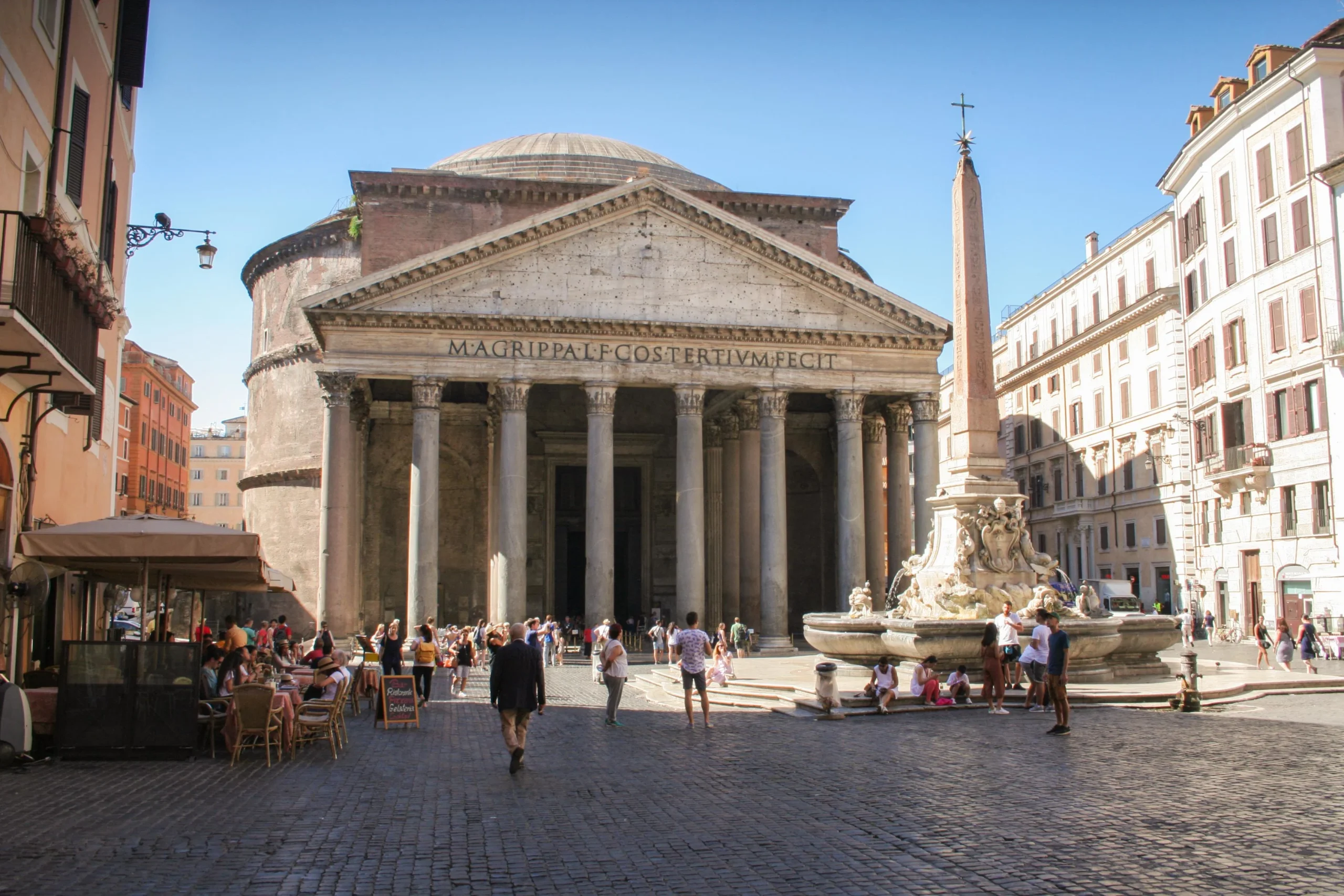
Le Panthéon original a été commandé par Marcus Vipsanius Agrippa during the reign of Emperor Augustus, around 27–25 BC. The inscription on the front of the building still carries Agrippa’s name.
However, the building visitors see today is largely the result of reconstruction during the reign of Emperor Hadrian, around 118–125 AD. The reconstructed monument introduced the magnificent circular rotunda and its enormous dome that have become symbols of Roman architectural achievement.
The Pantheon later underwent an important transformation. In 609 AD, it was converted into a Christian church and dedicated as Basilica of Santa Maria ad Martyres. This continued use helped preserve the building through the centuries.
Today, the Pantheon remains one of the best-preserved monuments from ancient Rome.
The Amazing Pantheon Dome
One of the main reasons people visit the Pantheon is its extraordinary dome.
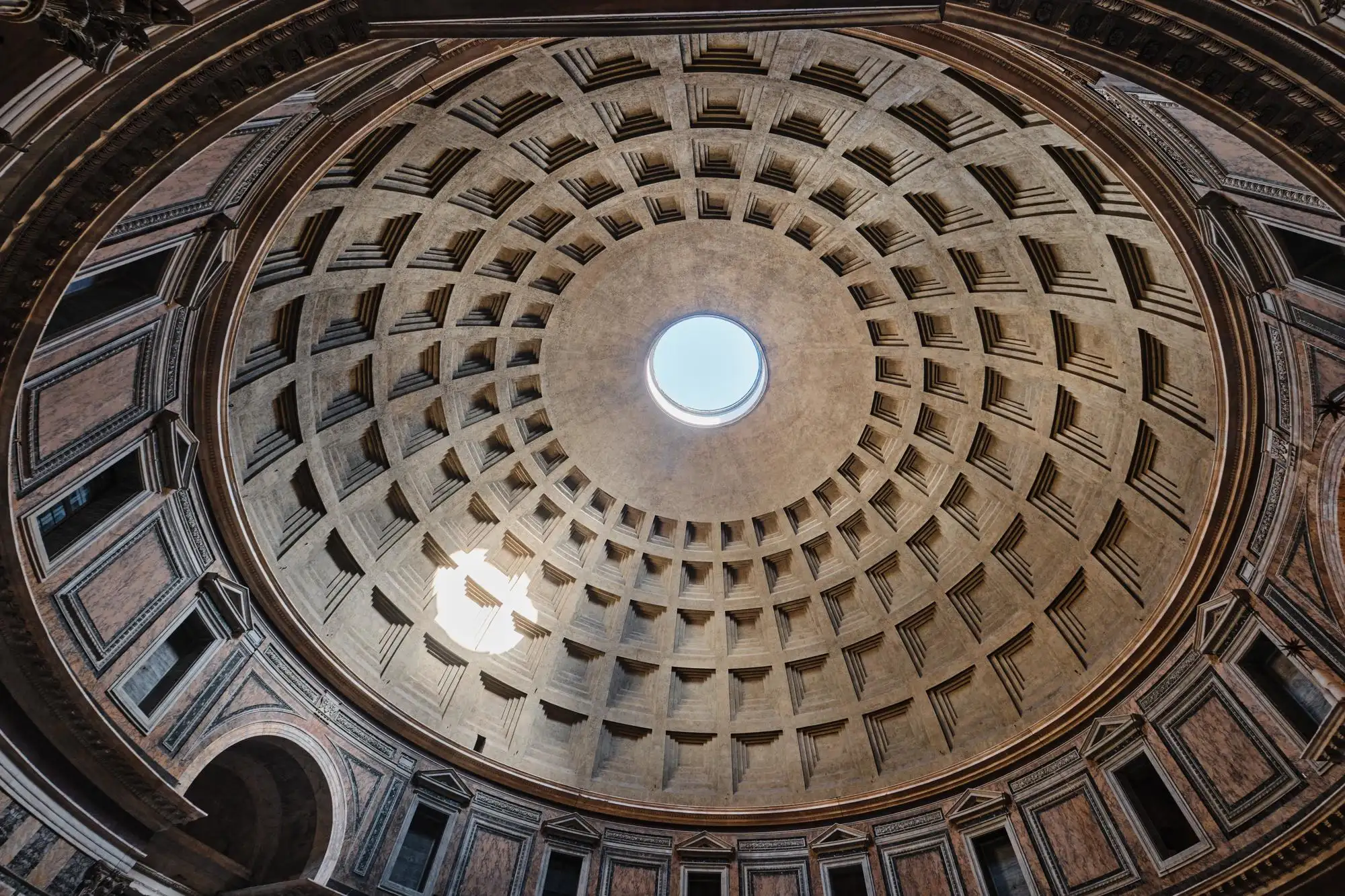
The interior rotunda measures approximately 43.3 metres in diameter and 43.3 metres in height, creating a remarkable geometric relationship between the floor, walls and dome. At the centre of the dome is the famous oculus, a circular opening approximately 9 metres wide.
The oculus is not simply a decorative feature. Natural light enters through it and moves across the interior throughout the day, creating an impressive visual experience.
The dome is also an extraordinary example of Roman engineering. Its construction demonstrates how Roman builders used concrete, geometry and changing material density to create a huge unsupported space.
For a deeper look at Roman engineering and the Pantheon’s architectural significance, visitors can explore the Pantheon material available through Google Arts & Culture.
Why Is the Pantheon Important?
The Pantheon is much more than an ancient building. It represents several different periods of Roman history.
It began as a Roman religious monument, was later transformed into a Christian church and eventually became an important historical and cultural landmark.
The building’s exceptional preservation also makes it especially valuable for understanding ancient Roman architecture. The Pantheon is included within the Historic Centre of Rome, a UNESCO World Heritage property containing some of the world’s most important archaeological and architectural monuments.
Son influence peut également être vue dans l'architecture du monde entier. La combinaison d'un portique classique et d'un énorme dôme a inspiré d'innombrables architectes et bâtiments monumentaux à travers l'histoire.
Que pouvez-vous voir à l'intérieur du Panthéon ?
Lors de votre visite, plusieurs caractéristiques méritent une attention particulière :
1. Les colonnes corinthiennes
L'entrée est dominée par un portique monumental soutenu par 16 grandes colonnes corinthiennes en granit. Leur échelle donne immédiatement aux visiteurs une idée de l'ambition d'ingénierie derrière le bâtiment.
2. L'Oculus
L'ouverture circulaire au centre du dôme est sans doute la caractéristique architecturale la plus célèbre du Panthéon.
Lorsque la lumière du soleil pénètre à travers l'oculus, le faisceau de lumière se déplace à travers l'intérieur, créant une atmosphère en constante évolution.
3. Le dôme à caissons
L'intérieur du dôme contient une série de panneaux géométriques encastrés appelés coffres. Outre leur beauté visuelle, ces éléments aident à réduire le poids de la structure.
4. Tombes historiques
Le Panthéon contient également des tombes importantes. Parmi les personnes notables enterrées ici se trouve le célèbre artiste de la Renaissance Raphaël, along with members of the Italian royal family.
Pantheon Rome Tickets and Opening Hours
Visitors should check the official information before travelling because opening hours, ticket rules and special arrangements can change.
As of 2026, the official Italian Ministry of Culture information states that the standard admission price is €7, with reduced admission available for eligible visitors aged 18–25. Children under 18 can enter free under the applicable rules.
The Pantheon is generally open from 9:00 AM to 7:00 PM, with last entry before closing. Special evening openings may also take place during particular periods.
It is important to purchase tickets through official channels and check the latest information before your visit.
Best Time to Visit the Pantheon
The Pantheon can be busy, especially during peak tourist periods.
For a more comfortable experience, consider visiting:
- Early in the morning
- Later in the afternoon
- Outside the busiest holiday periods
If you are interested in photography, different times of day provide different lighting conditions inside and outside the monument.
The surrounding Piazza della Rotonda is also worth exploring. After visiting the Pantheon, you can enjoy the historic atmosphere of the square and continue walking toward other famous attractions in central Rome.
Explore the Pantheon as Part of Your Rome Trip
The Pantheon is located in a central area of Rome, making it easy to combine with other famous attractions.
A well-planned Rome itinerary can include the Pantheon together with places such as Piazza Navona, Trevi Fountain, the Roman Forum and the Colosseum.
If you are looking for a convenient way to explore the city’s major attractions, consider planning a Rome city tour with a local tour provider. This can help you experience the Pantheon and other historic landmarks without spending too much time organizing transportation and routes yourself.
Dernières réflexions
La Panthéon Rome est un monument rare où histoire, architecture et culture se rencontrent dans un lieu extraordinaire.
Des origines anciennes du temple d'Agrippa à la reconstruction d'Hadrien et à sa transformation ultérieure en église, le Panthéon n'a cessé d'évoluer tout en conservant son caractère architectural remarquable.
Son dôme massif, son célèbre oculus, ses colonnes monumentales et son intérieur historique en font l'un des endroits les plus fascinants à visiter à Rome.
Si vous prévoyez un voyage en Italie, assurez-vous que le Panthéon est inclus dans votre itinéraire à Rome. Une visite ici n'est pas simplement une expérience touristique : c'est l'occasion de se tenir à l'intérieur de l'une des plus grandes réalisations survivantes de l'architecture ancienne au monde.
Planifiez votre aventure à Rome et découvrez le Panthéon, des monuments historiques et des expériences inoubliables à travers la Ville éternelle.