

Panthéon Rome : Histoire, architecture, billets et guide touristique
The Pantheon Rome is one of the most remarkable ancient monuments in Italy and one of the must-see attractions for anyone visiting the Eternal City. Located in the heart of Rome at Piazza della Rotonda, this extraordinary building has survived almost two thousand years of history.
From its impressive Corinthian columns to its enormous concrete dome and famous central oculus, the Pantheon offers visitors a unique glimpse into the engineering and architectural achievements of ancient Rome.
Whether you are visiting Rome for the first time or returning to explore more of the city, the Pantheon deserves a place on your itinerary.
A Brief History of the Pantheon
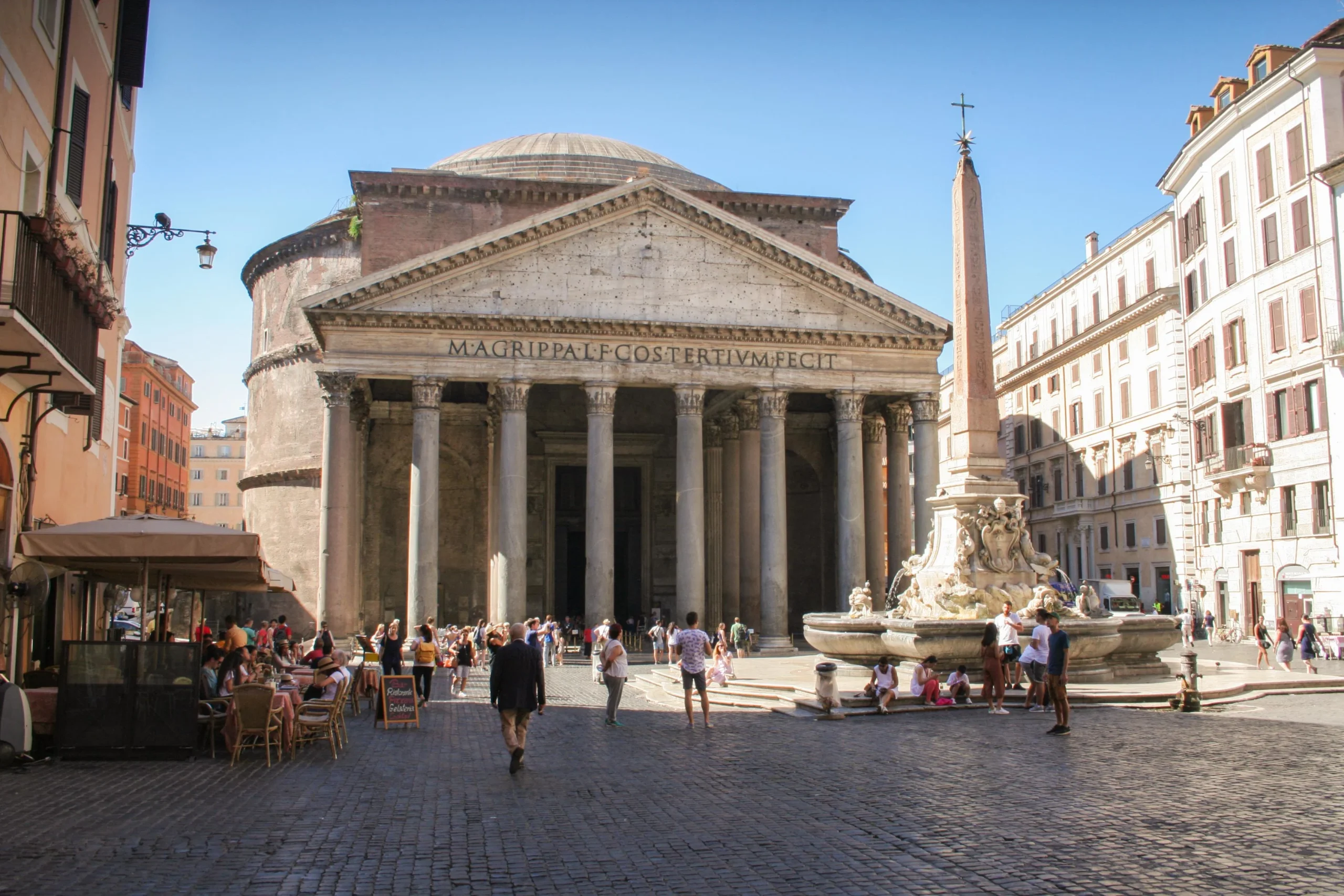
The original Pantheon was commissioned by Marcus Vipsanius Agrippa during the reign of Emperor Augustus, around 27–25 BC. The inscription on the front of the building still carries Agrippa’s name.
Cependant, le bâtiment que les visiteurs voient aujourd'hui est en grande partie le résultat de la reconstruction sous le règne de L'empereur Hadrien, vers 118–125 après JC. Le monument reconstruit a introduit la magnifique rotonde circulaire et son énorme dôme qui sont devenus des symboles de la réalisation architecturale romaine.
Le Panthéon subit plus tard une transformation importante. En 609 après JC, elle a été convertie en une église chrétienne et consacrée comme Basilique Santa Maria ad Martyres. Cette utilisation continue a permis de préserver le bâtiment à travers les siècles.
Aujourd'hui, le Panthéon reste l'un des monuments les mieux conservés de la Rome antique.
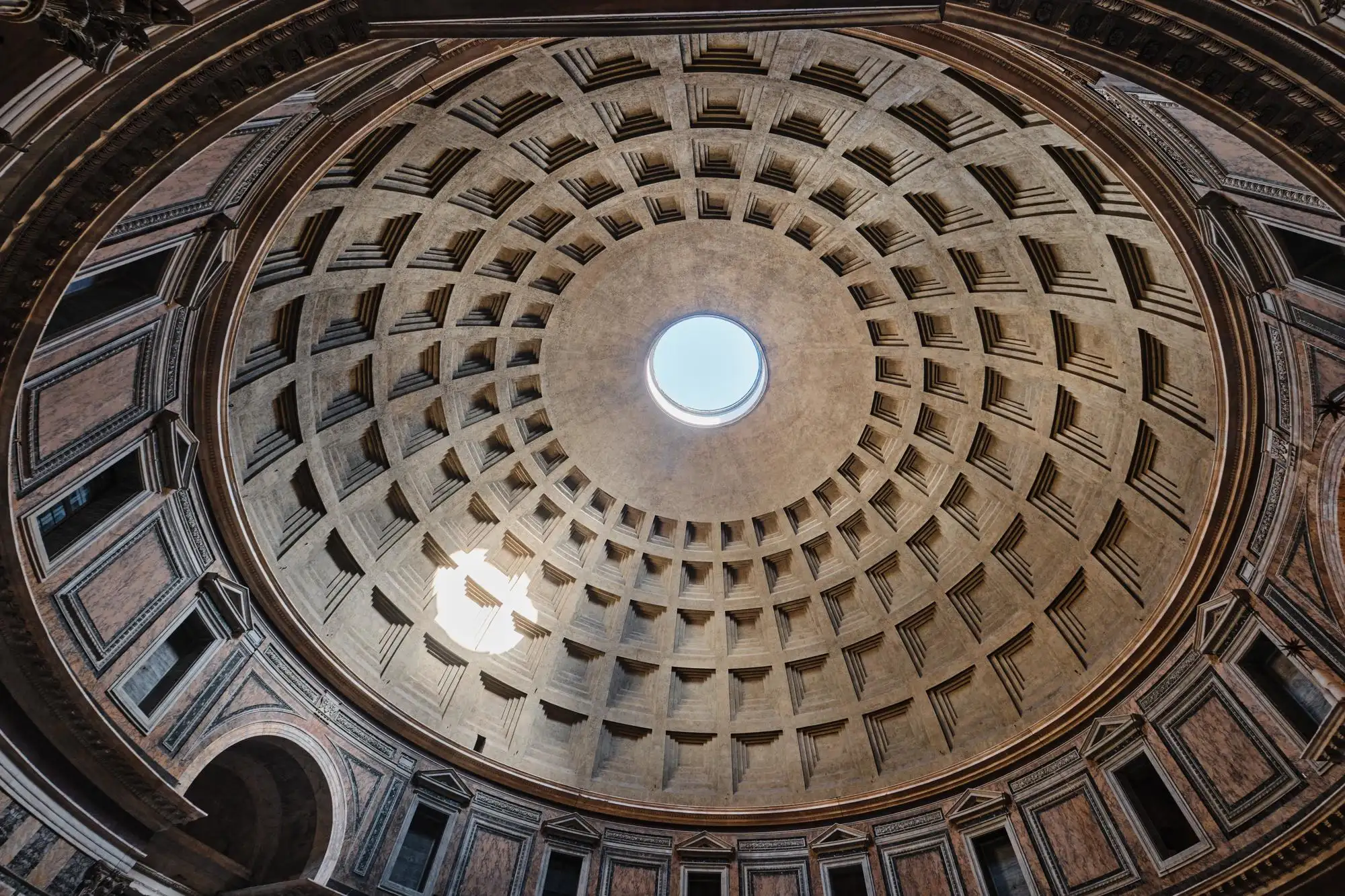
L'incroyable dôme du Panthéon
L'une des principales raisons pour lesquelles les gens visitent le Panthéon est son extraordinaire dôme.
La rotonde intérieure mesure environ 43,3 mètres de diamètre et 43,3 mètres de hauteur, créant une relation géométrique remarquable entre le sol, les murs et le dôme. Au centre du dôme se trouve le célèbre oeil, une ouverture circulaire d'environ 9 mètres de large.
L'oculus n'est pas simplement un élément décoratif. La lumière naturelle y pénètre et se déplace à travers l'intérieur tout au long de la journée, créant une expérience visuelle impressionnante.
The dome is also an extraordinary example of Roman engineering. Its construction demonstrates how Roman builders used concrete, geometry and changing material density to create a huge unsupported space.
For a deeper look at Roman engineering and the Pantheon’s architectural significance, visitors can explore the Pantheon material available through Google Arts & Culture.
Why Is the Pantheon Important?
The Pantheon is much more than an ancient building. It represents several different periods of Roman history.
It began as a Roman religious monument, was later transformed into a Christian church and eventually became an important historical and cultural landmark.
The building’s exceptional preservation also makes it especially valuable for understanding ancient Roman architecture. The Pantheon is included within the Historic Centre of Rome, a UNESCO World Heritage property containing some of the world’s most important archaeological and architectural monuments.
Its influence can also be seen in architecture around the world. The combination of a classical portico and enormous dome has inspired countless architects and monumental buildings throughout history.
What Can You See Inside the Pantheon?
During your visit, there are several features worth paying special attention to:
1. The Corinthian Columns
The entrance is dominated by a monumental portico supported by 16 large Corinthian columns made from granite. Their scale immediately gives visitors an idea of the engineering ambition behind the building.
2. The Oculus
The circular opening at the centre of the dome is arguably the Pantheon’s most famous architectural feature.
When sunlight enters through the oculus, the beam of light moves across the interior, creating a constantly changing atmosphere.
3. The Coffered Dome
The interior of the dome contains a series of recessed geometric panels known as coffers. Besides their visual beauty, these elements help reduce the weight of the structure.
4. Historic Tombs
The Pantheon also contains important tombs. Among the notable people buried here is the famous Renaissance artist Raphael, along with members of the Italian royal family.
Billets et heures d'ouverture du Panthéon de Rome
Les visiteurs doivent vérifier les informations officielles avant de voyager, car les heures d'ouverture, les règles relatives aux billets et les dispositions spéciales peuvent changer.
À partir de 2026, les informations officielles du ministère italien de la Culture indiquent que le prix d'entrée standard est de €7, avec une entrée réduite disponible pour les visiteurs éligibles âgés de 18 à 25 ans. Les enfants de moins de 18 ans peuvent entrer gratuitement en vertu des règles applicables.
Le Panthéon est généralement ouvert de De 9 h à 23 h, avec la dernière entrée avant la fermeture. Des ouvertures spéciales en soirée peuvent également avoir lieu pendant des périodes particulières.
Il est important d'acheter des billets par les canaux officiels et de vérifier les dernières informations avant votre visite.
Meilleur moment pour visiter le Panthéon
Le Panthéon peut être occupé, en particulier pendant les périodes de pointe touristique.
Pour une expérience plus confortable, pensez à visiter :
- 07. Je connaissais pas Paris le matin
- Jusqu'à tard dans l'après-midi
- En dehors des périodes de vacances les plus achalandées
Si vous êtes intéressé par la photographie, différents moments de la journée offrent différentes conditions d'éclairage à l'intérieur et à l'extérieur du monument.
The surrounding Piazza della Rotonda is also worth exploring. After visiting the Pantheon, you can enjoy the historic atmosphere of the square and continue walking toward other famous attractions in central Rome.
Explore the Pantheon as Part of Your Rome Trip
The Pantheon is located in a central area of Rome, making it easy to combine with other famous attractions.
A well-planned Rome itinerary can include the Pantheon together with places such as Piazza Navona, Trevi Fountain, the Roman Forum and the Colosseum.
If you are looking for a convenient way to explore the city’s major attractions, consider planning a Rome city tour with a local tour provider. This can help you experience the Pantheon and other historic landmarks without spending too much time organizing transportation and routes yourself.
Final Thoughts
The Pantheon Rome is a rare monument where history, architecture and culture come together in one extraordinary place.
From the ancient origins of Agrippa’s temple to Hadrian’s reconstruction and its later transformation into a church, the Pantheon has continuously evolved while retaining its remarkable architectural character.
Its massive dome, famous oculus, monumental columns and historic interior make it one of the most fascinating places to visit in Rome.
If you are planning a trip to Italy, make sure the Pantheon is included on your Rome itinerary. A visit here is not simply a sightseeing experience—it is an opportunity to stand inside one of the world’s greatest surviving achievements of ancient architecture.
Plan your Rome adventure and discover the Pantheon, historic landmarks and unforgettable experiences across the Eternal City.